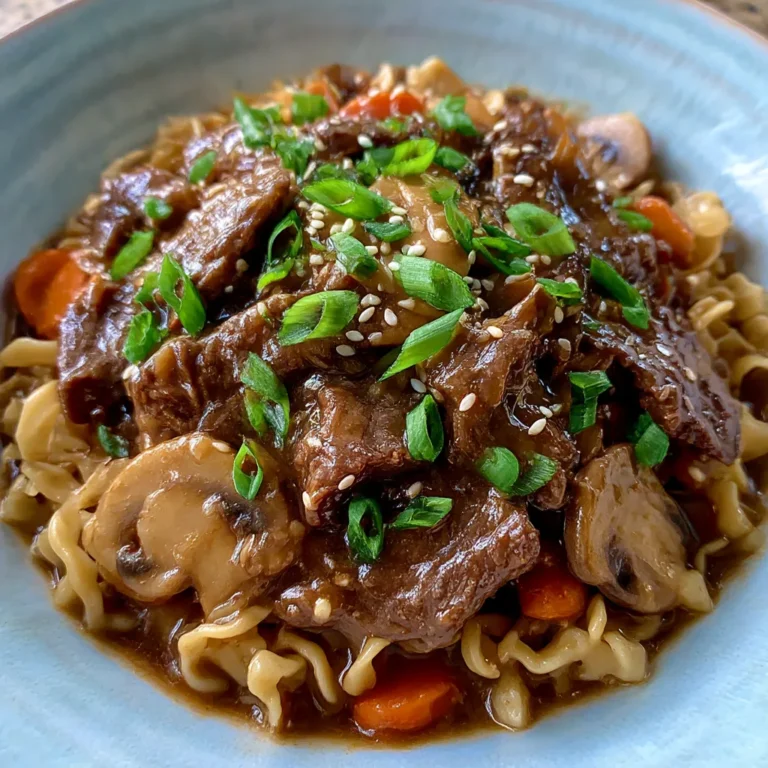
I’m a busy mom and professional. Korean Beef Noodles grew from late-night planning. I built a kitchen routine around comforting, flavorful meals. They come together with minimal fuss. I craved something warm, soulful, and crowd-pleasing. Slow-cooked beef sits in a fragrant garlic-soy broth. Noodles and crisp-tender vegetables finish the bowl. This dish brings cozy comfort without long hours at the stove. In this guide, I share pantry-to-plate magic. You’ll learn to tailor it to your family. Plus, I’ll show how to prep ahead. So you can serve a restaurant-quality bowl on busy evenings. Korean Beef Noodles ties our schedules to family dinners. One comforting bite at a time.
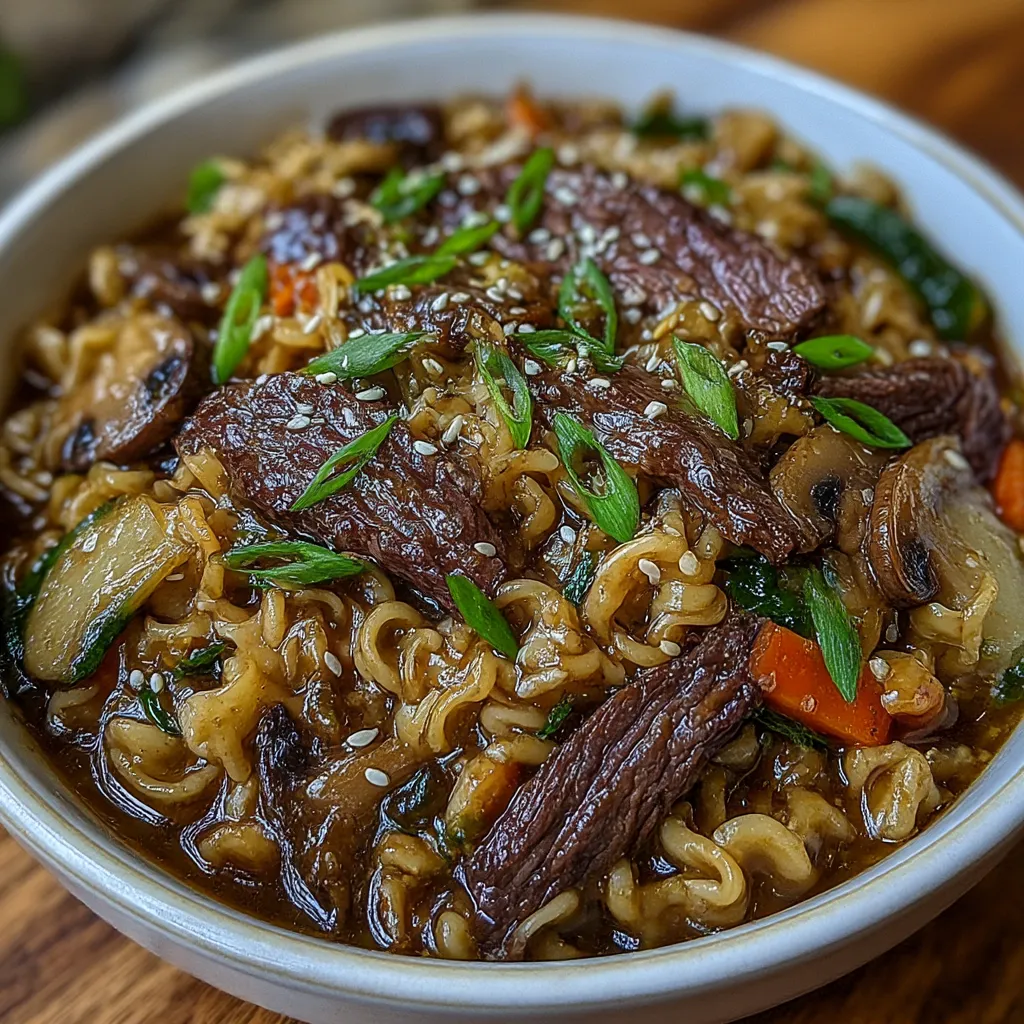
Korean Beef Noodles is my go-to on busy nights. The clock chases me, and the kitchen feels chaotic. I love how the slow cooker does the heavy lifting. It turns inexpensive beef into fork-tender goodness in a fragrant garlic-soy broth. This dish feels cozy and a little glamorous, like a restaurant bowl. It’s flexible enough for busy schedules—pantry staples, a handful of fresh veggies. You’re done when dinner time arrives. I’ll share tips to tailor it to your crew and pantry.
I call this a hug in a bowl. The slow cooker handles the simmering, so I can focus on homework or carpool. It’s ready when I am, and the aroma can make a tired mom grin.
Why this lean on flavor, not effort (Korean Beef Noodles as a time-saver)Flavor is built, not chased with effort. The garlic, ginger, soy, and sesame give depth, while the slow simmer does the rest. A few pantry staples become a restaurant-worthy bowl with minutes of prep.
I’m all about meals that feel special without stealing hours from the day. Korean Beef Noodles delivers. A simple mix, a slow cooker, and you walk away while the aroma builds. The garlic, ginger, soy, and sesame translate into a broth that tastes like a weekend treat, not a rushed meal.
When supper time hits, the beef stays tender and the noodles soak up the flavor. Korean Beef Noodles shines on busy nights.
Kids love the gentle sweetness and familiar aroma. You can tailor salt and spice to fit your crew.
Gluten-free? Use coconut aminos and rice noodles. Add toppings like sliced green onions or sesame seeds for color.
These ingredients come together to make Korean Beef Noodles a cozy weeknight staple. I love how this dish packs bold flavor with simple pantry staples. Exact quantities are listed at the bottom of the article and printable version for easy reference.
Beef for Korean Beef NoodlesBeef for Korean Beef Noodles: Use 1½ lb beef chuck or flank steak, thinly sliced. This cut stays tender after slow cooking and soaks up the garlicky-salty goodness. If you need gluten-free, swap soy sauce for coconut aminos in the broth later.
Broth, flavor base, and aromatics for Korean Beef Noodles: 6 cups beef broth create a rich foundation. ⅓ cup soy sauce or coconut aminos adds depth without too much salt, and garlic, ginger, and sesame oil lift the aroma. A cornstarch slurry of 1 tbsp cornstarch with 2 tbsp water thickens the sauce slightly if you like.
Vegetables, noodles, and texture in Korean Beef NoodlesVegetables, noodles, and texture in Korean Beef Noodles: Use 1 small onion, sliced, plus 1 cup carrots julienned and 1 cup mushrooms for color and bite. 8 oz egg-free noodles or rice noodles finish the bowl with silky chew that holds onto the sauce. Add the noodles after the broth and veggies have simmered so they soak up every drop.
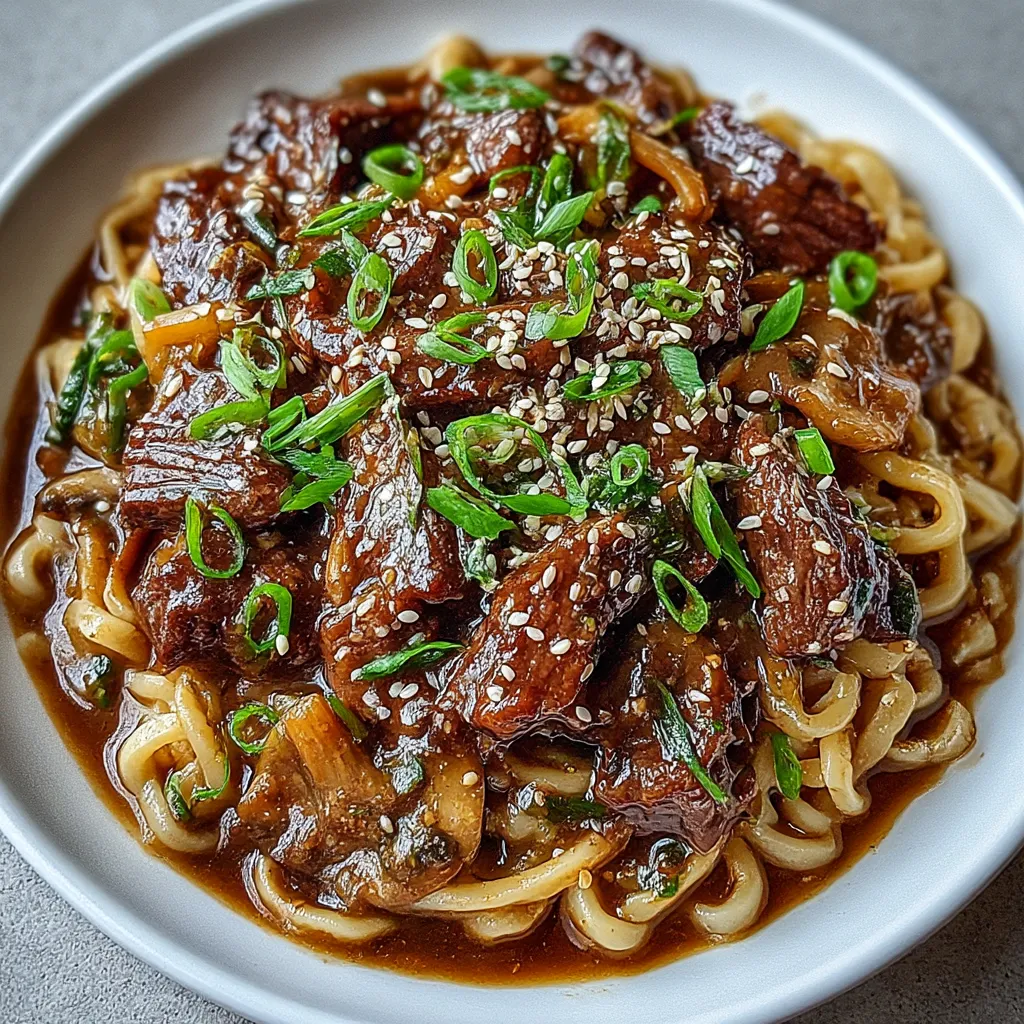
Garnishes and optional add-ins for Korean Beef Noodles: Garnish with sliced green onions or sesame seeds for bright contrast. For a little heat, add chili flakes or a squeeze of lime to wake the flavors. You can also drizzle a pinch more sesame oil at the end for aroma.
How to Make Korean Beef Noodles Step One — Prep the beef and flavor base for Korean Beef NoodlesI begin by prepping the beef and flavor base for Korean Beef Noodles. I slice the beef thin so it browns quickly and stays tender when it braises in the slow cooker. I place the beef in the pot and whisk together 6 cups beef broth, ⅓ cup soy sauce or coconut aminos, 2 tablespoons brown sugar, 1 tablespoon sesame oil, 4 cloves garlic, 1 tablespoon grated ginger, and 1 small onion to form a fragrant base.
I set the slow cooker on low for 5–6 hours or high for 3–4 hours, until the beef is fork-tender. I peek once midway, removing any excess fat so the broth stays clean and glossy. The aroma alone makes a busy day feel calmer and more possible.
Step Three — Add veggies, thicken the broth, and cook noodlesIn the last 30 minutes, I add carrots and mushrooms to the slow cooker for color and bite. This keeps them crisp-tender and lively in the finished bowl.
If you like a slightly thicker sauce, whisk a cornstarch slurry (1 tablespoon cornstarch with 2 tablespoons water) into the pot and simmer briefly. Meanwhile, cook the noodles separately according to package instructions until al dente, then drain and set aside.
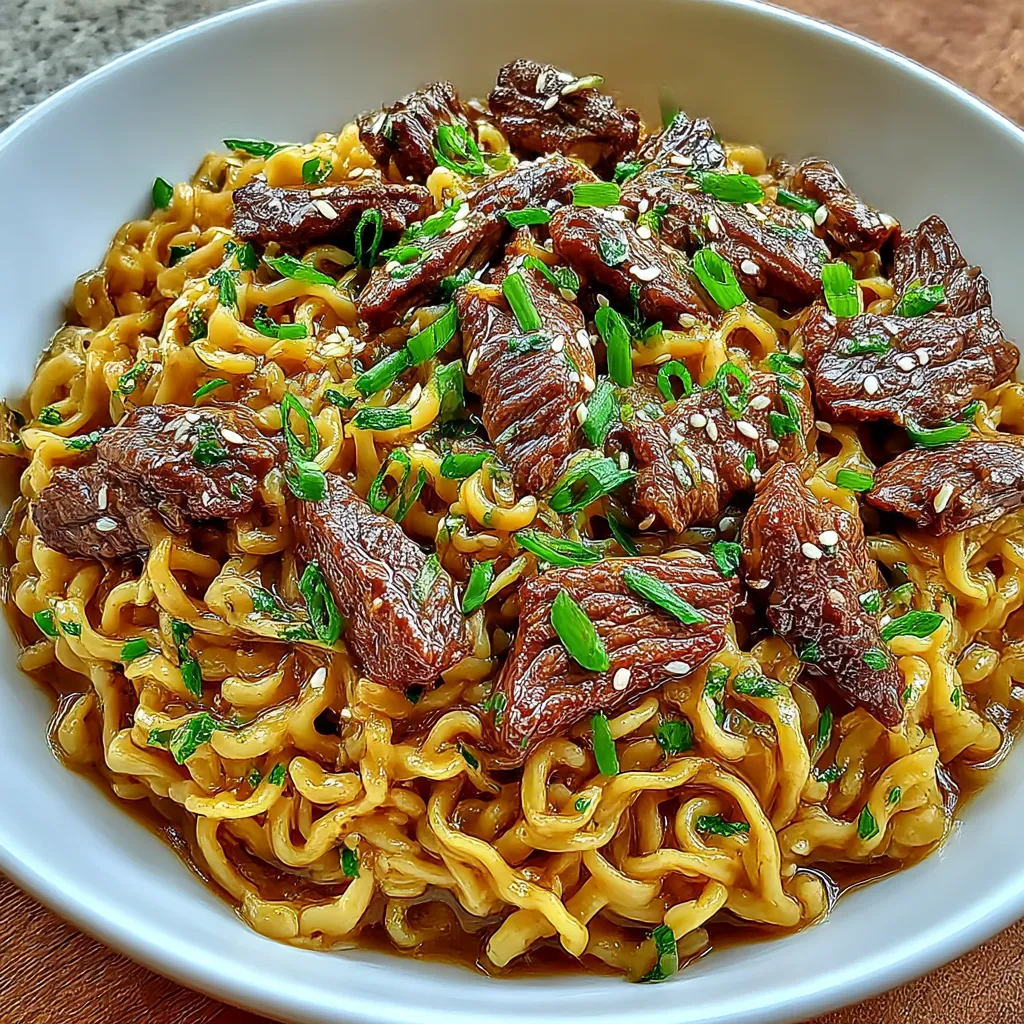
When the noodles are ready, stir them into the slow cooker with the beef and broth. Toss gently to coat each strand and soak up all the garlicky, savory goodness. If you want, you can reserve a cup of broth to loosen the mixture as you toss.
Serve the bowls hot, topped with sliced green onions or a sprinkle of sesame seeds for brightness. I like a splash of sesame oil or a lime wedge for a bright finish. This is comfort that tastes like a hug and cooks in minutes in real life.
Tips for Success with Korean Beef Noodles Flavor and texture tips for Korean Beef Noodles- I taste and adjust the broth as Korean Beef Noodles simmer.
- Brown the beef well to deepen flavor.
- Let garlic and ginger bloom for aroma.
- Keep noodles al dente to avoid mush.
- Make broth ahead; flavors meld overnight.
- Slice beef ahead to speed dinner.
- Cook noodles last to avoid soggy texture.
- Store components separately; reheat gently.
- Slow cooker or electric pressure cooker (Korean Beef Noodles)
- Large pot for noodles
- Sharp chef’s knife and cutting board
- Measuring spoons and cups
- Strainer or spider for vegetables
- Ladle, whisk, and tongs
- Stovetop simmer if you don’t own a slow cooker
- Dutch oven or heavy pot as a stand-in
- Colander for draining noodles
- Pre-minced garlic and ginger to save time
- Silicone spatula for easy tossing
These variations keep Korean Beef Noodles cozy and dinner-ready, even when the pantry is light or the clock is tight. I love adapting it to dietary needs and what’s in the fridge, without losing that garlicky-salty soul. Here are my go-to tweaks for gluten-free, plant-based, and noodle-and-veggie swaps.
- Swap soy sauce for coconut aminos or certified gluten-free tamari to keep the sauce savory and safe.
- Try gluten-free noodles like rice noodles or millet-based pasta; they soak up flavor beautifully.
- For thickening, use arrowroot or potato starch instead of cornstarch if you need a GF substitute.
- Keep sesame oil and garlic robust to maintain depth, even with swaps.
- Season gradually; you can add a splash of lime or rice vinegar for brightness if salt is a concern.
- Extra-firm tofu, pressed and pan-seared, adds satisfying bite and soaks up the broth.
- Tempeh or shredded jackfruit can mirror the texture without meat.
- Shredded rotisserie chicken or turkey can stand in for a lighter protein punch.
- Chickpeas or white beans offer heft and fiber if you want a true plant-based bowl.
- Rice noodles, glass noodles, or kelp noodles are great gluten-free options that hold sauce well.
- Swap in bok choy, spinach, or baby bok choy for color and greens.
- Try broccoli florets, snap peas, or bell peppers for crunch and sweetness.
- For extra depth, add mushrooms like shiitake or cremini, sliced thin.
- Spiralized zucchini or carrot ribbons make a lighter, veggie-forward version.
I love balancing this cozy bowl with a few bright sides. Here are my go-to pairings and simple presentation tricks to keep weeknights feeling special.
Ideal sides to complement Korean Beef Noodles- Crisp cucumber kimchi or quick-pickled cucumber salad
- Steamed greens like bok choy with a splash of sesame oil
- A small side of kimchi for zing
- Light rice or millet-based sides if you want extra starch
- Ladle broth first, nest noodles, then top with beef
- Garnish with sliced green onions and sesame seeds
- Drizzle a touch of sesame oil for aroma
- Serve in warm bowls with a lime wedge, if desired
I love prepping Korean Beef Noodles flavor ahead for busy weeks.
Storing broth, beef, and noodles separately keeps textures intact.
That way, weeknights feel calm, not chaotic, and dinner tastes fresh.
For meal prep, cool broth in a wide container.
Chill promptly and store up to four days in the fridge.
Freeze in labeled portions for up to three months.
Keep sliced beef in separate bags with date labels.
Freeze for up to three months, thaw safely in fridge.
Reheat gently to avoid tough bites.
Store noodles separately, either cooked al dente or dry.
Cooked noodles dry out; better to reheat with broth.
Assemble fresh bowls when serving.
Warm broth gently on the stove until steaming.
Add beef and any soft vegetables to heat through.
Toss with freshly reheated noodles off the heat.
If noodles were frozen, thaw before adding.
Add a splash of broth to loosen the sauce.
Taste and adjust salt or sesame oil.
Yes, you can. I make Korean Beef Noodles on the stovetop or in an Instant Pot.
Stovetop: simmer the beef and broth until fork-tender.
Instant Pot: cook on high pressure 20–25 minutes, then natural release.
Finish by stirring in veggies and noodles as usual.
Is this recipe gluten-free-friendly or can I adapt it with coconut aminos?Korean Beef Noodles can be gluten-free friendly with coconut aminos.
Use coconut aminos 1:1 in place of soy sauce for the base.
If you prefer, gluten-free tamari works too, but read labels to avoid hidden gluten.
Choose gluten-free noodles like rice noodles to keep texture nice.
How long does Korean Beef Noodles keep well in the fridge or freezer?Korean Beef Noodles store well with proper packaging.
In the fridge, keep the broth and beef for 3–4 days.
Freeze broth and beef separately for up to three months; noodles are best fresh.
Reheat gently on the stove, adding a splash of broth to loosen.
Can I customize the spice level or add heat to Korean Beef Noodles?Yes, you can tailor heat to your taste in Korean Beef Noodles.
Add chili flakes, gochujang, or sriracha a little at a time.
Taste often and adjust salt after adding heat.
A final squeeze of lime brightens the spice without dulling flavor.
Final Thoughts on Korean Beef Noodles Why this recipe stays in your weekly rotationAfter testing and tasting, I keep coming back to Korean Beef Noodles on busy weeks. It’s reliable, comforting, and fills the house with a warm aroma that eases the out-the-door scramble. The slow cooker does the heavy lifting, but the final bowls feel bright and personal. It’s a hug you can serve in minutes, and it scales with your crew.
Encouragement to tailor and enjoy with loved onesI want you to tailor the flavors to your family. Swap noodles, adjust heat, add favorite veggies. Korean Beef Noodles is forgiving—a cozy, flexible staple that still tastes like a treat. Serve it with laughter and a quick clean-up, and you’ve turned a weekday dinner into a memory.
Print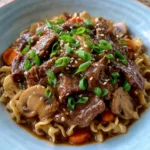
Korean Beef Noodles: Ultimate, Irresistible, Cozy 5-Serv.
- Total Time: 6 hours
- Yield: 6 servings 1x
- Diet: Gluten Free
Description
Korean Beef Noodles – Savory, cozy slow-cooker comfort with tender beef simmered in a fragrant garlic-soy broth.
Ingredients
- 1½ lb beef chuck or flank steak, thinly sliced
- 6 cups beef broth
- ⅓ cup soy sauce or coconut aminos
- 2 tbsp brown sugar or honey
- 1 tbsp sesame oil
- 4 cloves garlic, minced
- 1 tbsp fresh ginger, grated
- 1 small onion, sliced
- 1 cup carrots, julienned
- 1 cup mushrooms, sliced
- 8 oz egg-free noodles or rice noodles
- 1 tbsp cornstarch
- 2 tbsp water
- Optional: sliced green onions or sesame seeds for garnish
Instructions
- Place sliced beef in the bottom of the slow cooker.
- Add beef broth, soy sauce, brown sugar, sesame oil, garlic, ginger, and onion.
- Cover and cook on low for 5–6 hours or high for 3–4 hours, until beef is tender.
- In the last 30 minutes, add carrots and mushrooms.
- Cook noodles separately according to package instructions; drain.
- Mix cornstarch with water and stir into the slow cooker to slightly thicken the broth.
- Add cooked noodles to the slow cooker and toss gently to combine.
- Serve warm, garnished if desired.
Notes
- To keep the dish gluten-free, use coconut aminos instead of soy sauce.
- If you prefer a thicker sauce, stir in the cornstarch slurry and simmer until slightly thickened.
- Garnish with sliced green onions or sesame seeds as desired.
- Prep Time: 15 minutes
- Cook Time: 5–6 hours on low (3–4 hours on high)
- Category: Main Course
- Method: Slow Cooker
- Cuisine: Korean
Nutrition
- Serving Size: 1 serving
Keywords: Korean Beef Noodles, slow cooker beef noodles, Korean-inspired comfort food, weeknight dinner, beef noodle soup